
Can AI Really Read Your Emotions and Behavior?
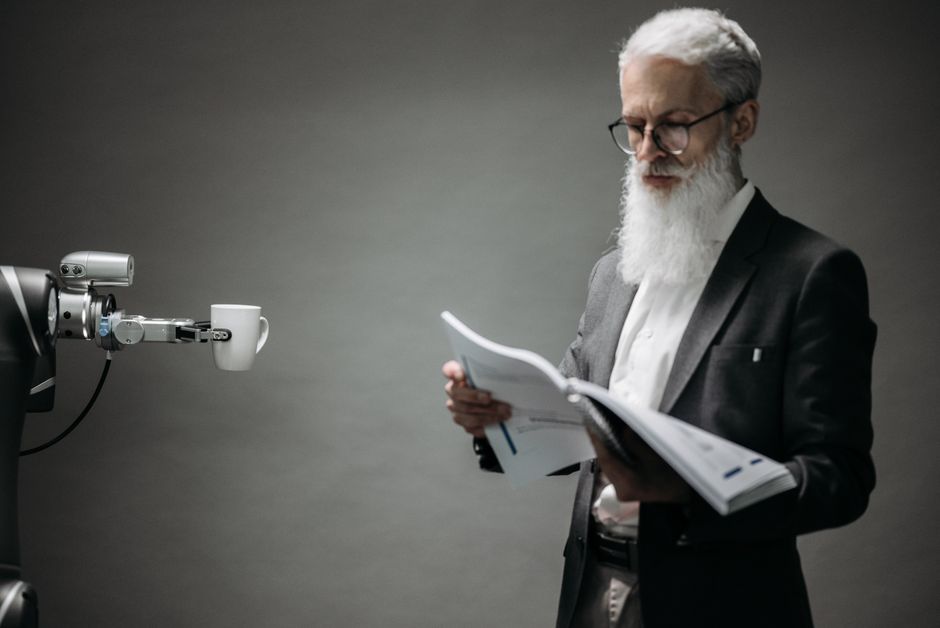
AI can identify faces, detect movements, and analyze voice or video patterns, but it cannot reliably diagnose what you feel, whether you are lying, or whether you are truly distracted. Those inferences are highly context-dependent and can be biased. Challenge these systems when they affect hiring, discipline, education, health care, access, or surveillance.
How does AI behavior recognition work?
AI behavior recognition turns observable signals into a score, label, or alert. The key move is to separate three jobs that are routinely blurred together: identifying a person, detecting an activity, and inferring an internal state. They are not interchangeable.
| System task | What it does | What it does not establish |
|---|---|---|
| Face recognition | Matches a face to an identity or checks whether it matches a stored reference. | Emotion, honesty, attention, or intent. |
| Face or behavior classification | Labels a visible attribute, movement, or pattern in audio or video. | Why the movement happened or what the person means. |
| Emotion or behavior inference | Claims to infer mood, attentiveness, sentiment, personality, or state of mind. | A dependable diagnosis of a person's inner state. |
The distinction is not academic. The Federal Trade Commission separates facial detection, characteristic analysis, and face matching. A system can locate a face without identifying its owner. It can match an owner without knowing whether that person is engaged. Once a vendor jumps from “we detected a face” to “this person is inattentive,” ask for the evidence behind that leap.
In workplaces, the input can be broader than a webcam. The U.S. Equal Employment Opportunity Commission lists monitoring that can evaluate facial expression, voice, movement, task time, location through wearables or apps, email, keystrokes, cursor activity, and customer surveys. More inputs do not automatically produce a truer conclusion. They can simply create a more detailed record around a weak inference.
Use the Three-Box Test. Ask: “Is this system identifying me, detecting an action, or claiming to interpret me?” Then ask: “What decision follows from that label?” Those two questions cut through most marketing language.
Can AI accurately tell whether someone is angry, lying, or distracted?
No, not as a reliable standalone determination. A scowl, a pause, a quiet voice, or a shifting gaze is visible behavior; anger, deception, and distraction are explanations layered onto that behavior. The system sees the first thing and makes a claim about the second.
That gap matters most when the score carries consequences. The FTC's IntelliVision order defines facial-recognition technology broadly enough to include systems that infer sentiment, emotional state, state of mind, personality, character, veracity, attentiveness, or mood from a face alone or combined with other data. The order requires competent and reliable testing before effectiveness, accuracy, or bias claims are made. That is the right standard for your question: request the testing, not the sales language.
NIST documents why surface signals can mislead. In one investigated hiring system that purported to assess tone of voice, language, gestures, and facial expressions, superficial changes such as glasses or a bookshelf changed scores. That is not a meaningful read of a candidate. It is a system reacting to shortcuts.
Weak question: “Does the tool work?” Strong question: “What evidence shows that this score predicts the specific decision being made, for people in this setting, and what unrelated changes alter the result?” The stronger version puts the burden where it belongs: on the organization using the score.
If a manager says an alert proves you were disengaged or dishonest, use a direct response: “Please identify the underlying data, the rule that produced this result, and the human review available before it affects my record.” Ask for a review of the actual work, interview, or interaction. Do not argue with a mysterious percentage.
Is facial emotion recognition scientifically reliable?
No. Facial movements are not sufficiently reliable and specific across contexts to serve as diagnostic displays of a person's emotional state. That conclusion comes from a 2019 peer-reviewed review in Psychological Science in the Public Interest, which examined evidence around anger, disgust, fear, happiness, sadness, and surprise.
The practical problem is context. The review found substantial variation across cultures, situations, and people in the same situation. A scowl can communicate more than an emotion. It might reflect concentration, discomfort, bright light, disagreement, or something public evidence does not reveal. A machine that gives one label treats ambiguity as certainty.
NIST reaches a related warning in its bias framework: systems marketed as predicting from facial expressions can rest on scientifically unsound premises or spurious learned patterns. NIST identifies systemic, statistical, and human bias, and states that zero risk of bias is not achievable.
Do not confuse evidence about face matching with evidence about emotion inference. In a NIST evaluation of 189 mostly commercial face-recognition algorithms from 99 developers, false-positive rates across demographic groups often varied by factors from 10 to more than 100. That report is about identity recognition, not emotion recognition, but it makes the operating rule clear: name the exact class of system before accepting an accuracy claim. “AI face analysis” is not one product category and not one accuracy number.
Can an employer use AI to analyze my behavior in an interview?
Yes, an employer can use AI to analyze a recorded video interview or monitor facial expression, voice, and movement, but federal employment discrimination laws still apply. The EEOC specifically identifies AI evaluation of a recorded video interview as a hiring-stage use and states that protections cover discrimination based on race, color, religion, sex, national origin, age 40 or older, disability, and genetic information.
The important question is not whether the employer calls the system “assistive.” It is whether the output changes who advances, who is rejected, who is monitored, or who is disciplined. NIST states that AI hiring systems claiming to infer information from candidate audio and video have been shown to increase bias in outcomes and may involve trade-offs between bias mitigation and prediction accuracy.
Run the Challenge Script before or after an AI-mediated interview:
- “Is AI being used to evaluate my recorded interview, voice, facial expression, gestures, or other behavior?”
- “What information does it generate, and does it affect hiring decisions?”
- “Can I receive a human review and provide context or request an alternative process?”
- “What is retained, who receives it, and when is it deleted?”
This is not about demanding that every system be removed. It is about refusing a black-box judgment when the stakes are your job. A useful deployment can explain its purpose, data, decision path, retention practice, and route for correction. If it cannot, treat that as a deployment risk, not a communication failure on your part.
This week's drill: pick one camera, interview platform, attendance tool, or workplace dashboard you encounter. Write the Three-Box Test answers and the four Challenge Script questions before you need them. The best time to ask for the rule is before the rule writes a score about you.
Frequently Asked Questions
What data does behavior-recognition AI collect and store?
It can process facial images, facial measurements, voice, movement, and video. Workplace monitoring can also evaluate task time, location from wearables or apps, email, keystrokes, cursor activity, and customer surveys, according to the EEOC. What is retained depends on the organization, so ask for its notice, retention policy, and deletion process.
How can I tell whether a camera is using AI to monitor people?
You often cannot tell by looking at the device. The FTC notes that camera-equipped digital signs capable of demographic detection can look no different from signs without cameras. Look for notices before entering, ask the operator what the camera analyzes, and request a written explanation of the system's purpose.
Why can emotion-recognition systems be biased across cultures or demographics?
People communicate facial movements differently across cultures, situations, and individuals, so the same expression does not carry one fixed emotional meaning. NIST also identifies systemic, statistical, and human sources of AI bias and says zero risk of bias is not achievable. A system trained on patterns that do not represent the person or setting being assessed can turn those gaps into unequal outcomes.
Sources
- U.S. Equal Employment Opportunity Commission: Employment Discrimination and AI for Workers
- National Institute of Standards and Technology: Towards a Standard for Identifying and Managing Bias in Artificial Intelligence
- Psychological Science in the Public Interest: Emotional Expressions Reconsidered
- National Institute of Standards and Technology: Face Recognition Vendor Test
- Federal Trade Commission: Facing Facts
- Federal Trade Commission: IntelliVision Final Order